
With permission from lettherebedoodles I decided to take their amazing Racebent Disney Princess Seriesand, rather than just seeing them as different versions of the original characters, give them stories and fairy tales of their own. I plan on doing her entire series- hopefully I won’t disappoint!
Some of the stories will be based on the culture the new heroine is based on, and others will be stories from other cultures (such as ‘traditional’ western fairy tales), even real life people will inspire these Disney-style Princesses and Heroines. But please remember- this is all for fun. I’m not pretending to be an expert on any of this. I’ll try my best to do right by these characters and cultures, and if there is something horribly offensive, please let me know how I can fix it.
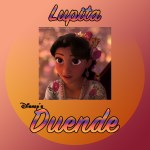
Lupita is the oldest child in her family, with two younger siblings, fraternal twins Felipe and Josefina. Lupita loves to paint, but after the death of her mother almost a year ago, she’s been very depressed. All she’s had time for is hard work and chores and keeping the household running. Her art has suffered, and she’s frustrated with life, and that the twins seem to only goof off and get into trouble.
One night, just before Dia de los Muertos is about to start, Lupita loses her cool and tells the twins to do something, anything, to help out around the house. Laughing, they run off into the darkness, Lupita chasing angrily after- only to watch them be snatched up by La Llorona.
As Dia de los Muertos begins, Lupita receives a visit from her mother, who tells her that she must save the twins before Dia de los Muertos ends and the spirits of the dead return to the afterlife. So Lupita sets out to find La Llorona, and in the process, find joy and laughter in her own life again.
Yara – Flow
Yara has always loved the river, just like the sirens she was named for when she was found orphaned as a baby. And her home, a floating village on the Amazon River, gave her plenty of reasons to be near the water. Even though the river could be dangerous, Yara was never afraid.
So when a group of wealthy explorers come, wanting to map the river and document wildlife, she happily agrees to be their guide. But these men are not what they seem, and when they commit an unthinkable crime- killing a river dolphin- the river begins to flood like never before. The villagers then tell her the truth about her origins. Yara isn’t just her name, she is truly an Iara, a mermaid of the Amazon. With help from a charming and handsome shape-shifter, Boto, she sets out to find a way to stop the flood from destroying her home.
Sedna and Qailertetang – The Legend of Us
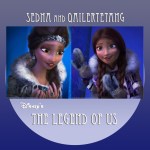
Sedna is considered the most beautiful woman in the world. Qailertetang is her best friend… and thinks she may be falling in love with Sedna. But Qailertetang is too afraid to say anything, and then a strange man shows up at their village. He reveals himself to be a powerful spirit, who can take the form of a massive Petrel and control the weather. The Petrel spirit demands that Sedna marry him, and when she refuses, he kidnaps her and takes her to a distant sea cliff.
Heartbroken and desperate to save her friend, Qailertetang, sets off in a kayak to save her. Along the way, she saves a two-spirit shaman, and they tell her that even though love is confusing, she should tell Sedna how she feels. Meanwhile Sedna, trapped on a sea cliff, plots a way to escape on her own. Together, they find a way to defeat the Petrel spirit.
Together, they change in a way they would have never thought possible.
Author’s Note: Loosely based on what I’ve been able to find about the Inuit goddesses/spirits of Sedna and Qailertetang. I don’t think I’ve made any horrible errors here, and I wish I knew more about Inuit naming conventions to come up with a diminutive version of Qailertetang because that is a mouthful. But for the sake of not accidentally shortening it to something offensive, I left it as is.
P.S. Friendly reminder if you have any, LITERALLY ANY, resources on African (specifically Luo/West Niletic/East African- think the Jasmine edit) stories, folktales, even modern fiction, please let me know. I’m having a lot of trouble with it.
With permission from lettherebedoodles I decided to take their amazing Racebent Disney Princess Series and, rather than just seeing them as different versions of the original characters, give them stories and fairy tales of their own. I plan on doing their entire series- hopefully I won’t disappoint!
Some of the stories will be based on the culture the new heroine is based on, and others will be stories from other cultures (such as ‘traditional’ western fairy tales), even real life people will inspire these Disney-style Princesses and Heroines. But please remember-this is all for fun. I’m not pretending to be an expert on any of this. I’ll try my best to do right by these characters and cultures, and if there is something horribly offensive, please let me know how I can fix it.
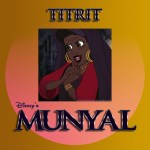
Based on the fairy tale The Black Bull of Norroway, Munyal is the story of a Titrit, the energetic and cheerful youngest daughter of a family of cow herders in West Africa. Her family travels a lot, but never stays in one place for long. Titrit’s older brothers always tease her, but the family is very happy. But she always wishes that they would stay in one place- she’s tired of always leaving behind her new friends.
Then one day, while out guarding the cattle at night, a enormous bull, so black that it looked like a cloudy night sky, and able to talk. He promises her that he has a way will her travel the world almost instantly- and that way, visit all of her friends whenever she wants. All Titrit has do is first sit very, very still.
Important Note: Honestly, the EXTREME difficulty in finding African folklore that wasn’t dumbed down for (white American) audiences or solely African-American slave folklore from the US was one of the reasons it has taken me so damn long to finish this series. It’s incredibly frustrating. I ended up going with a Scottish story I’m familiar with, because of the nomadic herding culture present in this area. I’ve never been so aware of how frustrating and disappointing it must be for anyone of African descent, especially those affected by diaspora, to try and find out about what their heritage might have been like. And what I was going for here was simplistic compared to that. The best I could do is the title- Munyal is a word from the Fulani code of behavior called pulaaku. It roughly has to do with a cross between strength and courage in adversity and a stoic acceptance or endurance of the supposedly pre-ordained vicissitudes of life. It is often translated as patience.
Sorry I couldn’t do better 😦
Sayyida al Hurra- Pursuit
Loosely based on the real life story of Sayyida al Hurra, the last woman in Islamic history to legitimately hold the title of “al Hurra”, or Queen. She was also the undisputed leader of the pirates from the Mediterranean.
Her whole life, Sayyida traveled. First, when she was younger, her family was exiled. Determined to make the people who did that pay, she takes up piracy and began raiding. Clever, resourceful, and as fierce as the sea, she soon becomes the leader of pirates. One day, she captures the ship of the King of Morocco and the two of them begin a strange relationship as he chases the Pirate Queen in an attempt to catch her. Despite falling in love, they keep up the elaborate game, one ruler of the seas and one ruler of a country.
Important Note: I do not know very much about Islamic history and it was super unclear whether Sayyida was a name, a title, or an honorific, so if this is an incorrect way to refer to her, let me know and I will fix it.
P.S. If anyone has any resources on African (specifically Luo/West Niletic/East African- think the Jasmine edit) stories, folktales, even modern fiction, please let me know. I’m having a lot of trouble with it.
With permission from lettherebedoodlesI decided to take their amazing Racebent Disney Princess Series and, rather than just seeing them as different versions of the original characters, give them stories and fairy tales of their own. I plan on doing their entire series- hopefully I won’t disappoint!
Some of the stories will be based on the culture the new heroine is based on, and others will be stories from other cultures (such as ‘traditional’ western fairy tales), even real life people will inspire theseDisney-style Princesses and Heroines. But please remember-this is all for fun. I’m not pretending to be an expert on any of this. I’ll try my best to do right by these characters and cultures, and if there is something horribly offensive, please let me knowhow I can fix it.
Based on the Hans Christian Anderson fairy tale The Wild Swans. Sarika and her seven older brothers are royalty. Their mother had died, and so their father took a second wife, who was a very jealous woman who hated the children. She uses magic to try to turn the children into cranes and send them far away, but her magic didn’t work on Sarika, only the brothers. The evil stepmother decides to just kill Sarika and blame the missing brothers, but the children are able to escape.
Sarika and her crane brothers search for a way to reverse the curse, but find out the solution is much more complicated than they hoped. In the end, Sarika may have to decide between saving her brothers and making an ultimate sacrifice.
Important Note: This is actually another fairy tale of Anderson’s where a heroine looses the use of her voice. That fact, plus my huge love of the gorgeous Demoiselle Crane, or Koonj (which is native to India and features prominently in much of their story telling) are why I decided to give this European fairytale an Indian twist.
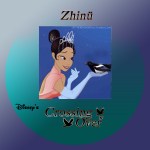
Zhinü- Crossing Over
Based on the famous Chinese legend of The Weaver Girl and the Cowherd, which is celebrated every year during the Qixi (or Qiqao) Festival. Sorry about the shitty photoshop magpie over the frog.
Zhinü was one of many daughters of the Goddess of Heaven. She was playful and smart, and helped weave colors into the sky. One day she became bored and decided to explore the human world. There, she met a mortal man named Niulang, who herded cows for a living. Niulang was hard working and serious and never did anything for fun- and this fascinated Zhinü, since in the heavens everyone was very relaxed. But they grew close, as Zhinü brought color and magic and Niujlang showed her how steadiness and stability can be important too. Soon they fell in love.
But love between humans and immortals was forbidden, and if one spend too much time in the world of the other, the universe would start falling out of balance and falling apart. Zhinü is forced to return to heaven, and she and Niulang try to find a way to be together without tearing the world apart.
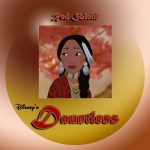
Red Shield- Dauntless
Inspired by the folk tale of Red Shield and Running Wolf, a frequently retold story by various Plains Indian tribes of North America.
Red Shield was raised on stories of the brave warriors of her tribe and their fights against the neighboring nations. She dreamed of fighting in epic battles and hunting buffalo, but her job was to take care of the people in her village. One day, while the warriors and hunters were all gone, a neighboring tribe attempted to raid and steal all of their horses. Red Shield road out to stop them by herself, impressing the enemy leader, Running Wolf.
Both of them are incredibly stubborn and strong-willed.. Soon, the two of them find themselves butting heads in other situations. They fight like a brother and sister, and even begin to feel like they are siblings. But through their combined stubbornness, they find a way to stop the long-standing war between their two nations.
Important note: I have very little knowledge of Native American culture. In the version I found, Red Shield was Lakota/Sioux, and Running Wolf was Crow- but since I don’t know enough about Plains Indian politics, I refrained from naming either nation. Also, in the original legend, the two fall in love and are married. Personally, I’d like to see some more brother-sister bonds instead.
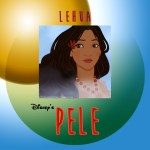
Lehua- Pele
Based on the Hawaiian legend of Pele’s Revenge. Lehua was a gentle, fragile young woman who lived on Hawai’i. She was shy, and soft-spoken, but fell in love with the town hero- Ohi’a. He was the best at everything, extremely popular with the ladies, handsome… but once he met Lehua, they became inseparable, deeply in love.
Unfortunately, one of the people who also fell for Ohi’a was the goddess of volcanos, Pele. Pele was incredibly powerful and passionate, but prone to jealous and rage. When Ohi’a refused her hand in marriage for Lehua, Pele captures him, and threatens everyone with lava and destruction. It’s up to shy, gentle Lehua to find a way to save her love and the entire island.
P.S. If anyone has any sources on African (specifically Luo/West Niletic- think the Jasmine edit) stories, folktales, even modern fiction, please let me know. I’m having a lot of trouble with it.

No, but you don’t understand how Lehua would be perf. It really nice to have that written out. There are at least two legends that I know of where Pele’s going after a dude and doesn’t get him. Anyway, I just got really excited, being Native Hawaiian I don’t often see my culture recognized in a non-superficial way.
Okay. That comment. OMG. I can’t even. That just makes me so incredibly super happy. Native Hawaiian culture (and language) is one of my favorite things to learn about, and to hear that I did even a little bit of justice to it just made my entire month.
Doing this little project, I was really concerned that I might not do right by the cultures I’ve been representing in these stories, so reactions like this are just amazing.
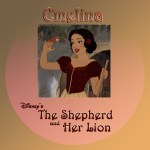
With permission from lettherebedoodles I decided to take her amazing Racebent Disney Princess Series and, rather than just seeing them as different versions of the original characters, give them stories and fairy tales of their own. I plan on doing her entire series- hopefully I won’t disappoint!
Some of the stories will be based on the culture the new heroine is based on, and others will be stories from other cultures (such as ‘traditional’ western fairy tales), even real life people will inspire these Disney-style Princesses and Heroines. But please remember- this is all for fun. I’m not pretending to be an expert on any of this. I’ll try my best to do right by these characters and cultures, and if there is something horribly offensive, please let me know how I can fix it.
Based on the fairy tale The Wounded Lion, this is the story of Emelina, an orphan who gets a job as a herding the royal sheep- in a kingdom plagued by a Giant. One day while watching her flock, she stumbles upon an injured Lion, and despite being afraid, stops to help him.
From that day forward, Emelina is pushed into a fantastic adventure involving a vain princess, a cursed prince, and a frankly absurd reason to terrorize a kingdom.
Kaguya- Full Moon
Based on the legend of Kaguya-Hime: The Tale of the Bamboo-Cutter. An old childless couple finds a baby in a bamboo stalk, and from that day on, they’re blessed by wealth and good fortune, and the girl, Kaguya, grows up to be the most beautiful woman in the world. Wealthy and Powerful men from all over the world come to try and marry her, but she refuses them all.
Even when she finally does find love, Kaguya realizes she has another destiny, and another world, that calls to her.
Israa- Oil and Wit
Inspired loosely by the stories “The Arab Girl in Hate and Love” and “The Wicked Girl”, this is the story of smart, clever girl who finds both danger and love when she seeks out adventure. Also I hate the title I came up with but I was getting stuck on it and Disney titles everything weirdly these days and just ugh
Israa works as the servant to a wealthy merchant family, taking care of their young daughter. When the young girl accidentally breaks an expensive oil lamp, Israa sneaks out to find a replacement- even though she doesn’t have any money. She meets a handsome young waiter who works for a cruel restaurant owner. After he helps her “borrow” a new lamp from the owner, the two of them starting meeting up at night to help people who have been wronged by the cruel and powerful get a little bit of payback.
Nanny- Queen of the Maroons
Based on the real life of Queen Nanny, a Jamaican National Hero. Nanny was an Ashanti girl who was taken as a slave to Jamaica. She grew up listening to stories about the escaped slave and native islander communities on the island, known as the Maroons. One day, she and her four “brothers” escaped, and went on to join the Maroons and establish their own towns hidden away in the mountains, safe from the slavers and soldiers who would drag them back to the plantations. Queen Nanny quickly became legendary. She used her bravery, brains, and (possibly) some of her own obeah magic to free all the slaves she could and defend her settlements from British attacks. Even today, she is celebrated in Jamaica and the Caribbean as a hero.
An important note on Queen Nanny– I actually started looking at slave rebellions in the Caribbean because I had an idea to do a “Scarlet Pimpernel” inspired female character who freed slaves. I had no idea that I would discover a real person who was even better than the character that I had imagined. Because my knowledge of history is limited, I chose to stick with a fairly straightforward summary for Queen Nanny. And she was badass enough to make it work completely.
With permission from lettherebedoodles I decided to take their amazing Racebent Disney Princess Seriesand, rather than just seeing them as different versions of the original characters, give them stories and fairy tales of their own. I plan on doing her entire series- hopefully I won’t disappoint!
Some of the stories will be based on the culture the new heroine is based on, and others will be stories from other cultures (such as ‘traditional’ western fairy tales), even real life people will inspire these Disney-style Princesses and Heroines. But please remember- this is all for fun. I’m not pretending to be an expert on any of this. I’ll try my best to do right by these characters and cultures, and if there is something horribly offensive, please let me know how I can fix it.
Inspired by the Luo legend, “Nyamgodho, Son of Ombare”, this is the story of Amondi, the daughter of a king and the most talented musician in all of Africa. Any song she sings can tame birds and beasts, and any object she picks up she can use as an instrument. She even tamed a lion, which grew to be her dear pet. Her voice even seemed able to do magic, and she was beloved by all for it.
One day, a poor, starving man appears to beg Amondi for her help. Introducing himself as Nyamgodho, he tells her that a demon has stolen his wife and dragged her into the Lake- along with all of the family’s wealth and possession. Now he and his children are alone and starving. He begged her to come and sing at the lake, to try and free his wife from the demon’s grasp. Touched by the poor man’s story, Amondi agrees, and begins the long journey back to his home on the Lake. However, she soon starts to realize that things are not quite what they seem, and that the man’s intentions may not be as pure as she originally thought.
Hatshepsut – The Pharaoh Queen
History knows her as Hatshepsut– one of the most powerful and successful pharaohs of all time. And a woman. Beautiful, fierce and cunning, she was a warrior and a leader. But this wasn’t always the case. As a child, she seemed hardly notable, shy and quiet.
But the gods knew she was destined for greater things than simply being the quiet, submissive wife of a pharaoh. This is the story of how Hatshepsut met the goddess Sekhmet. This is the story of how she became her pupil and friend. This is the story of how Hatshepsut became a pharaoh.
Kawariki – Tutira the Shark Man
Based on the Maori story “Kawariki and the Shark Man” Kawariki is the daughter of the leader of the tribe, a powerful tohunga who could use magic called Matakite. Her childhood friend, Tutira, was the child of prisoners-of-war, now force to work as servants. The two were inseparable growing up, and eventually fall in love. But Kawariki was expected to rule and Tutira to serve. Kawariki’s father Matakite tries to command her to stay away from Tutira, and orders her to marry a man from another tribe. When she fights against his orders, Matakite turns Tutira into a monster, a creature that can only live in the sea and away from her- a shark.
But Tutira can still turn back into a human once a month, during the new moon. The two try to find a way to turn Tutira back into a person permanently, before Kawariki is forced to marry someone she doesn’t love.
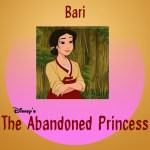
Bari- The Abandoned Princess
Based on the Korean myth of Bari the first shaman, this is the story of a princess who grows to be so much more. Bari was the 7th daughter of a cruel King named Ogu, who was hoping for a son. He abandoned Bari to be raised by farmers, angry at her for being female. Bari grows up knowing that she was abandoned, and is mistreated by those around her. Many people think she is cursed.
However, one day King Ogu and the queen grow severely ill, close to dying. The only cure is revealed to be water from the spring of life, which can only be reached by going through the Underworld. No one will go to get the healing water, and so Bari goes, hoping to earn back her parents love by healing them.
As she journeys, Bari meets all sorts of other people who have been abandoned- by their families, children, and society, even the gods. Bari helps them all, and soon begins to realize that maybe what she really need isn’t the approval of the people who abandoned her…
Important (FINAL!) Note: I’m done with this series! It took a lot longer than I originally thought it would, due in great part to how difficult it was to find mythology and legends from African cultures. But I really enjoyed putting this all together, and it was definitely worth it to wait until I was able to find an actual East African story. Granted, I decided to approach the story from a different angle (it’s one of my favorite things to do) but I hope people like that choice. Fairy tales are a big passion of mine, and I really enjoyed exploring the many different ways they can be told. I hope you enjoyed reading all of these, but most of all I hope I did right by the cultures and stories I explored in this series.
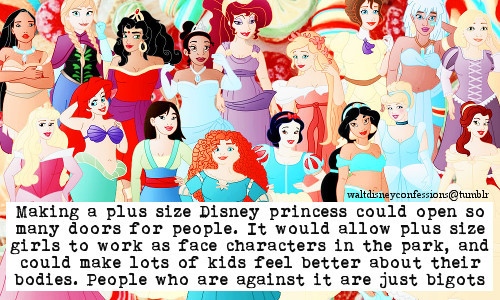
“Making a plus size Disney princess could open so many doors for people. It would allow plus size girls to work as face characters in the park, and could make lots of kids feel better about their bodies. People who are against it are just bigots.”
There’s nothing else like it! That design, the texture, the way it puffs out but manages to be elegant and regal!
Look at these cosplays!
Those are just cosplays!
Disney’s pouring 160 million dollars into this remake!
So tell me, Mickey, how did you and the gang manage to recreate the signature yellow dress?
…Ah.
she looks like a banana tree
it’s like in Cinderella all over again, where they poured like $25,000 into a 20-layered dress of the finest silk with Swarovski crystals and it looked like a cheap Halloween costume onscreen
this dress looks neither Rococo nor fantastical nor even visually interesting. the set is so incredible behind her and then there she is in her minimalist prom dress, the bright saturated color blowing out any details that might have redeemed it
the designer says it was designed for the reimagining of Belle as an “active” princess which
dude. there is a time and a place for activewear and it’s not in a ballroom